
BY: Aaron Verty
Uncategorized
Comments: No Comments
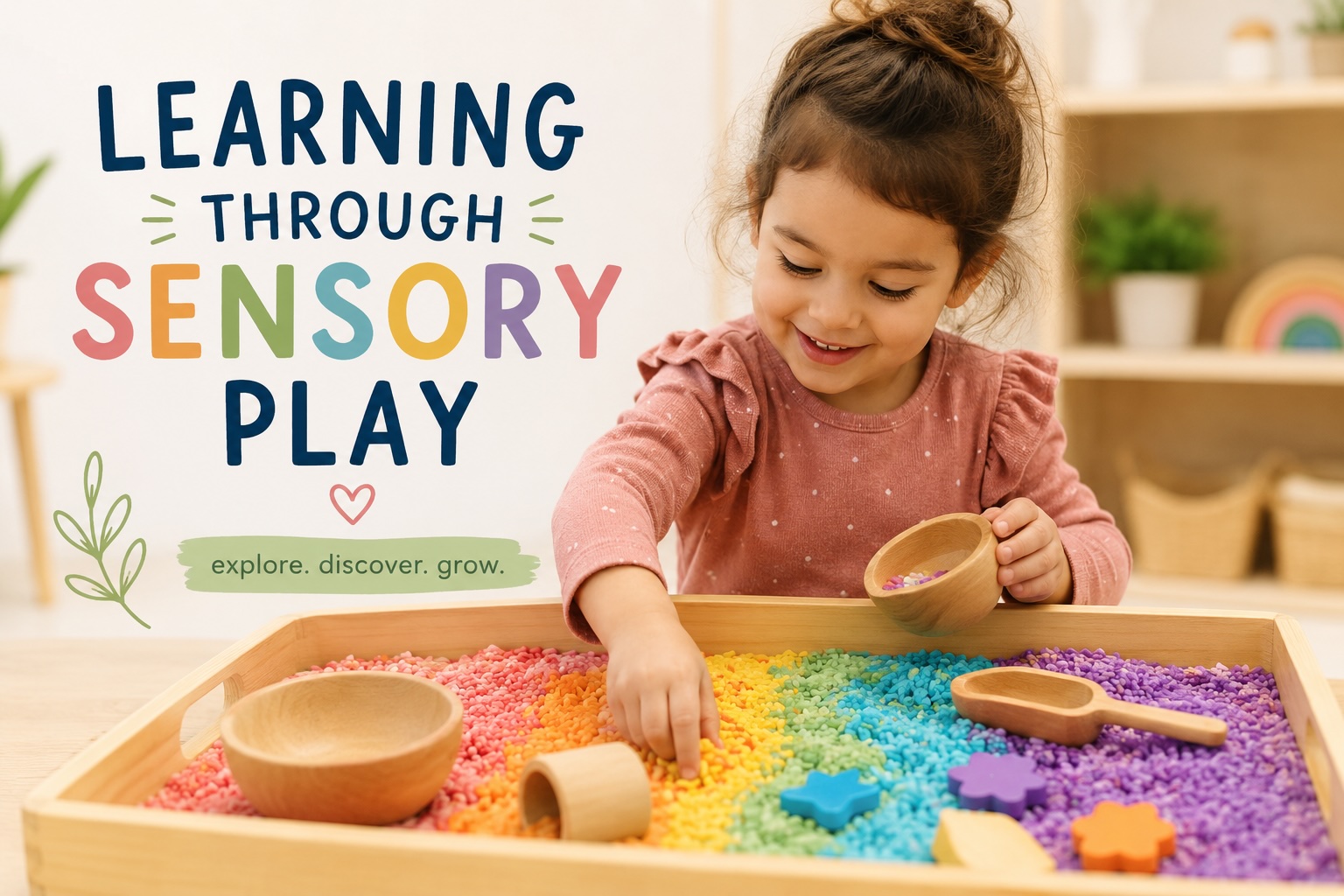
Sensory play can be a helpful tool to support learning. It can provide meaningful opportunities for children to explore, problem solve and be creative through play. Sensory play may include any activity that incorporates touch, sound, sight, smell or taste. Examples may include feeling different textures using slime or shaving foam, incorporating essential oils into waterplay to smell different scents, listening to nature sounds, and more! Sensory play can be a fun way for children to advance skills across multiple developmental domains.
- Language Development
Sensory play can provide the opportunity for children to identify different colours, shapes, and label objects. It can encourage children to expand their vocabulary by describing different textures, sounds, smells and what they see. Additionally, it can support children to follow instructions (e.g., “put in bucket”) and request different actions (e.g., “scoop sand”).
Adults can support language development by narrating key words during play. For example, verbally saying the action and whilst doing it (e.g., say “mix” and mix the material), pointing to different objects, colours and shapes and labelling it, and by describing the material (e.g., “this feels sticky”).
- Cognitive Development and Attentional Skills
Exploration of different objects, textures and ways of playing can promote creativity and problem solving. Children can also begin to learn concepts such as cause and effect by exploring different elements of play. Sensory play can be tailored to each child’s interests and sensory preferences. This may support attentional skills as children may be motivated to engage in the activity for a longer period of time.
- Motor Skills and Play Skills
Sensory play can support the development of fine motor skills. Children may practise actions such as poking or pinching the mixture, and using tools such as tongs or a paint brush during play. It also allows for opportunities for gross motor skill development, such as stomping or jumping on different textures. Exploring different actions may allow children to extend their play skills. Additionally, sensory play may support visual-motor skills by providing opportunities to practise hand-eye coordination.
- Emotional Regulation
Sensory play allows children to explore their own sensory preferences and needs. Understanding the child’s sensory interests can provide useful insight into the sensory tools and strategies they may use to regulate their emotions. Offering different sensory input that the child enjoys may provide a soothing experience that allows the child to regulate their nervous system.
Sensory play can be a fun and engaging way for children to practise skills across a range of developmental areas. This may include language development, cognitive and attentional skills, increasing motor skills and extending play skills. It also allows for children to explore sensory regulation tools which may be used to regulate their emotions when needed