
BY: Aaron Verty
Uncategorized
Comments: No Comments
How You Can Celebrate Book Week At Home

Book Week is an exciting time to celebrate children’s stories, imagination, and their interests. With Book Week coming up on the 22nd of August, here are some ideas to help you celebrate at home with simple, playful activities that support communication, sensory exploration, connection, and choice.Prepare for Book Week with social stories:
For some children going to school, Book Week may involve new or unfamiliar experiences. A social story can be a helpful way to introduce what they might encounter and provide information about what to expect. You could include pictures and simple information about dressing up if they would like to, seeing different costumes, reading stories, and participating in activities. Here is an example of a previous Book Week social story:
https://www.facebook.com/NorthernSupportSchoolLaunceston/videos/book-week-dress-up-day/2742914136021363/Favourite Stories:
You could turn your child’s favourite book into a sensory play-based experience. Sensory play can provide opportunities to explore different textures and materials while also supporting skills such as fine motor development, communication, and imaginative play. For example, if your child enjoys ‘The Very Hungry Caterpillar’ by Eric Carle, you could include some colourful playdough, pom poms, toy foods or textured materials such as coloured rice, pasta or sand. Your child may enjoy sorting colours, counting objects, requesting favourite items, or exploring the materials in their own way.Another example could be ‘The Rainbow Fish’ by Marcus Pfister. You could try a colourful waterplay activity or create a fish using different textures and materials. While exploring the activity, you could talk about colours, friendship, and the story while following your child’s interests and allowing them to decide how they would like to participate.
Exploring different costumes and accessories
Dressing up can be a fun part of Book Week, but every child may have different preferences when it comes to clothing and accessories. Your child may enjoy wearing a full costume, while another child may prefer a hat, cape, character-themed shirt or small accessory. You could offer a few different options and allow your child to choose what feels comfortable for them.Exploring sensory and interactive books
Sensory and interactive books can provide different ways for children to engage with stories. You could try books with textures, lift-the-flap pages, sounds, repetitive phrases or other interactive features.Christian A .(2022). Top tips for an inclusive Book Week all children will love. Disability Support Guide. https://www.disabilitysupportguide.com.au/talking-disability/top-tips-for-an-inclusive-book-week-all-children-will-love
Zhang, M., Hou, G., Chen, Y. C., Zhang, T., & Yang, J. (2020). A Book Interaction Scheme to Enhance Children’s Reading Experiences and Preferences. Frontiers in Psychology, 11, 2155. https://doi.org/10.3389/fpsyg.2020.02155
BY: Aaron Verty
Uncategorized
Comments: No Comments
CARING FOR SOMEONE WITH CANCER: WHO CARES FOR THE CARER?

Caring for a family member with cancer can be incredibly meaningful, but it can also bring significant emotional, physical and psychological stress.
A 2024 randomised controlled trial by Türkoğlu and Kavuran, published in Mindfulness, examined whether mindfulness could help family caregivers of people with cancer.
The researchers studied 104 family caregivers, comparing caregivers who participated in an 8-week online Mindfulness-Based Stress Reduction (MBSR) program with those who did not.
5 KEY TAKEAWAYS FROM THE RESEARCH
1. Caregiver stress deserves attention
Supporting someone through cancer can place considerable demands on family caregivers. Looking after the psychological wellbeing of the carer is an important part of supporting the whole family.
2. Mindfulness reduced caregiver stress
Caregivers who completed the 8-week mindfulness program experienced a significant reduction in stress compared with the control group.
3. Quality of life improved
The mindfulness group also experienced a significant improvement in caregiver quality of life following the program.
4. The benefits continued after the program
Improvements in stress and quality of life were still evident at the study’s four-week follow-up, although further research is needed to understand the longer-term benefits.
5. Support can be accessible
Importantly, the mindfulness program was delivered online. This is particularly relevant for carers, who may find it difficult to make time for their own appointments while managing the demands of caring for someone else.
HOW CAN A PSYCHOLOGIST AT CHANGE FOR LIFE HELP? 🌿
When much of your time and energy is focused on caring for someone you love, it can be easy for your own wellbeing to become secondary.
A psychologist at Change for Life can provide a confidential and supportive space that focuses on you. Psychological support may help you:
• Manage stress, worry and feelings of overwhelm
• Develop practical coping and relaxation strategies
• Learn mindfulness and emotional regulation strategies
• Manage difficult thoughts and emotions associated with a loved one’s illness
• Navigate changes in family roles and relationships
• Establish healthy boundaries and make space for self-care
• Recognise signs of caregiver burnout
• Build resilience while continuing to support the person you care for
You don’t have to wait until you are overwhelmed to seek support.
Looking after your own psychological wellbeing can help you cope with the demands of caregiving while continuing to be there for someone who matters to you.
📞 Change for Life Psychology
Psychological support for carers and families, with Telehealth appointments available across Australia.
Reference:
Türkoğlu, N., & Kavuran, E. (2024). The effect of mindfulness-based stress reduction program on stress and quality of life in family caregivers of patients with cancer: Randomized controlled trial. Mindfulness, 15, 1070–1079.
BY: Aaron Verty
Uncategorized
Comments: No Comments
When Worry Becomes Anxiety: What’s Normal and When Should You Seek Help?

Everyone worries.
You might worry about paying the bills, your child’s first day at school, an upcoming presentation or the health of someone you love. In fact, worrying is a normal part of being human. It helps us prepare for challenges, solve problems and recognise potential dangers.
But there comes a point where worry stops being helpful.
Instead of motivating you to act, it begins to control your thoughts, affect your sleep and stop you from enjoying life. When this happens, it may be more than everyday worry—it may be an anxiety disorder.
What’s Normal?
Normal worry usually has a purpose.
It tends to:
- Be related to a specific situation or problem.
- Reduce once the situation has passed.
- Be manageable, even if it’s uncomfortable.
- Allow you to continue working, studying and spending time with family and friends.
For example, feeling nervous before an exam or worrying while waiting for medical results is completely normal. Although these experiences may feel stressful, most people can continue with their usual activities.
When Does It Become an Anxiety Disorder?
Anxiety becomes a concern when it is persistent, excessive and begins to interfere with everyday life.
Some common signs include:
- Worrying most days for several weeks or months.
- Feeling unable to switch your thoughts off.
- Constantly expecting the worst.
- Avoiding situations because they make you anxious.
- Difficulty concentrating because your mind is racing.
- Trouble falling or staying asleep.
- Feeling restless, tense or constantly “on edge.”
- Physical symptoms such as a racing heart, nausea, dizziness, sweating or shaking.
Rather than helping you cope with life’s challenges, anxiety begins to make those challenges feel impossible.
Anxiety Doesn’t Always Look Like Panic
Many people think anxiety only means having panic attacks.
In reality, anxiety often appears much more subtly.
You may notice yourself:
- Constantly overthinking conversations.
- Repeatedly seeking reassurance from others.
- Procrastinating because you’re afraid of making mistakes.
- Avoiding social situations.
- Feeling mentally exhausted from constant worrying.
- Becoming irritable or unusually emotional.
Children often show anxiety differently. Instead of saying they feel anxious, they may complain of stomach aches, refuse to attend school, become unusually clingy, have trouble sleeping or become more emotional than usual.
An Important Fact Many People Don’t Know
One of the biggest misconceptions about anxiety is that people simply need to “stop worrying.”
Research tells us the opposite.
Anxiety changes the way the brain processes potential threats. Brain imaging studies have shown that areas involved in detecting danger—particularly the amygdala—can become overactive, while areas responsible for planning, decision-making and regulating emotions, such as the prefrontal cortex, may become less effective at calming these fear responses.
The encouraging news is that the brain remains capable of change throughout life. This ability, known as neuroplasticity, means that with the right treatment, these brain networks can become more balanced over time. In other words, anxiety isn’t simply something you have to live with—it is something your brain can learn to manage differently.
The Good News: Anxiety Is Treatable
Perhaps the most reassuring finding from decades of psychological research is that anxiety is one of the most treatable mental health conditions.
Large scientific studies consistently show that evidence-based psychological therapies—particularly Cognitive Behaviour Therapy (CBT) and Acceptance and Commitment Therapy (ACT)—help many people experience significant reductions in anxiety symptoms and improvements in daily functioning.
These therapies don’t simply teach people to “think positively.” Instead, they help individuals:
- recognise patterns of anxious thinking;
- understand how avoidance keeps anxiety going;
- gradually rebuild confidence by facing fears in manageable steps;
- develop practical strategies to calm the body’s stress response; and
- learn skills that continue to be useful long after therapy has finished.
Research also shows that early intervention matters. The sooner anxiety is recognised and treated, the less likely it is to interfere with work, school, relationships and overall wellbeing over the long term.
If you’d like to read more about the science behind anxiety treatment, this open-access review summarises the evidence for Cognitive Behaviour Therapy (CBT) across anxiety disorders:
Cognitive Behavioral Therapy for Anxiety and Related Disorders: A Meta-Analysis of Randomized Placebo-Controlled Trials (Read the scientific paper (PubMed); Beyond Blue – Treatments for Anxiety)
Remember, seeking help isn’t a sign that you’ve failed to cope—it’s often the first step towards regaining control. Just as we seek treatment for physical health concerns, it’s important to seek support when anxiety begins to affect our daily lives.
When Should You Seek Help?
Consider speaking with a psychologist if:
- your worries feel difficult to control;
- anxiety is affecting your work, school or relationships;
- you’re avoiding activities because of fear or worry;
- you’re experiencing panic attacks;
- your symptoms have persisted for several weeks or longer; or
- you’re finding it difficult to enjoy life because anxiety is constantly on your mind.
You don’t need to wait until anxiety becomes overwhelming before asking for help. Early support often makes recovery easier and helps prevent symptoms from becoming more entrenched.
You’re Not Alone
Anxiety affects millions of people and is one of Australia’s most common mental health conditions. Experiencing anxiety does not mean you are weak, and it certainly doesn’t mean you have failed.
With the right support, most people can learn effective ways to manage anxiety, regain confidence and return to doing the things that matter most to them.
Need support?
At Change for Life, our psychologists work with children, adolescents and adults experiencing anxiety using evidence-based therapies tailored to each person’s individual needs. If anxiety is beginning to interfere with your daily life, we’d be happy to help.
BY: Aaron Verty
Uncategorized
Comments: No Comments
Autism TIPS: Preparing Your Child for a Positive Return to School
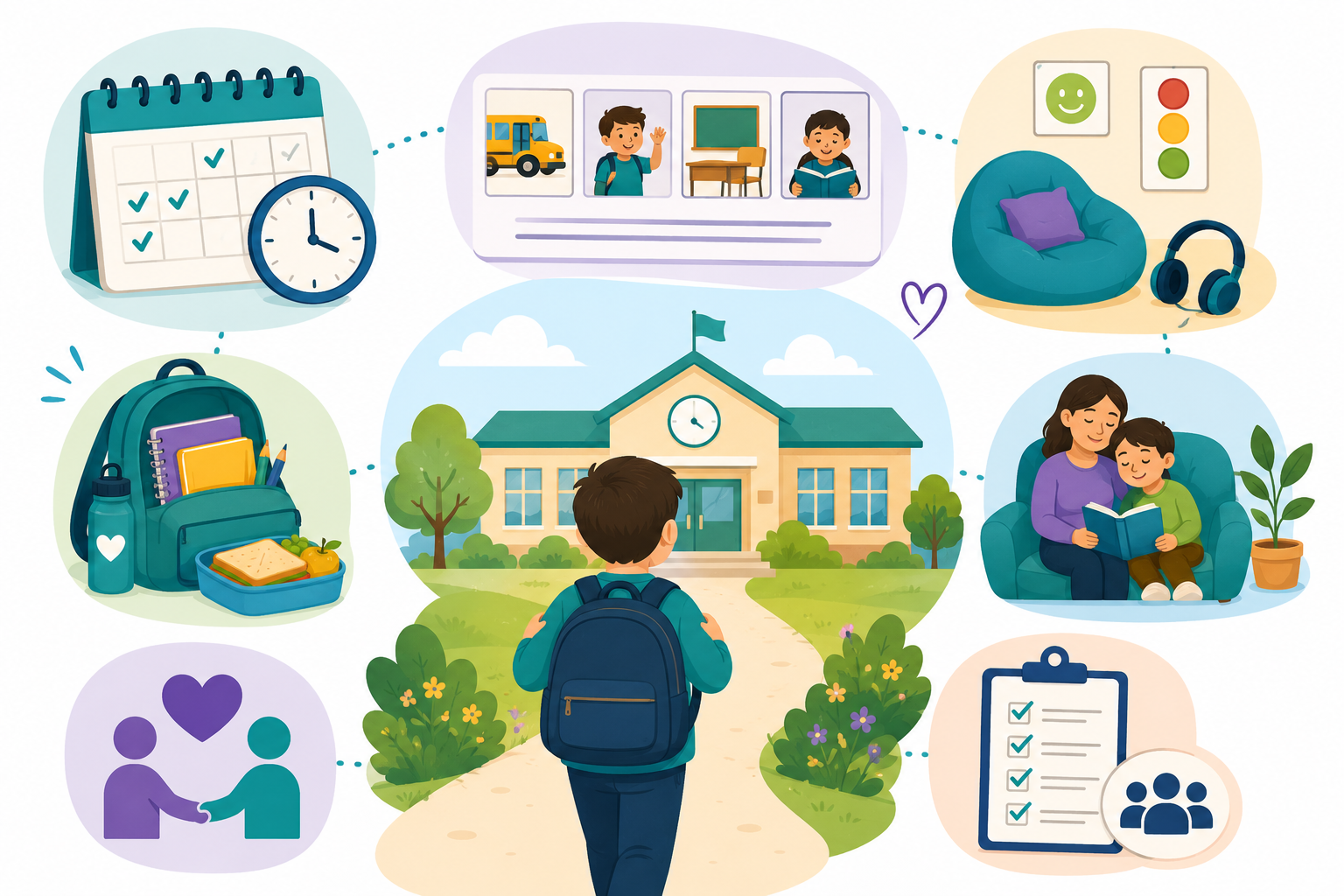
Autism TIPS: Preparing Your Child for a Positive Return to School
Returning to school is often easier when families begin preparing well before the first day. Establishing familiar routines, reducing uncertainty, and working closely with school staff can help children feel more confident and supported as they transition back into the classroom.
Some practical strategies include:
- Re-establish daily routines early. Begin adjusting bedtimes, wake-up times, and morning routines one to two weeks before school resumes. Practising getting dressed in the school uniform, packing the school bag, and eating lunch from the lunchbox can help identify any practical or sensory challenges before the first day.
- Prepare your child for what to expect. Visiting the school grounds, playground, or classroom (where possible) before term starts can increase familiarity and reduce anxiety. Visual calendars or countdowns can also help children understand when school is approaching.
- Use visual supports. A personalised visual schedule or social story using photographs of your child’s school, teacher, classroom, and daily routine can help explain what will happen throughout the school day and make expectations more predictable.
- Collaborate with school staff. Share information about your child’s strengths, interests, communication style, sensory preferences, and successful support strategies with their teacher. This allows the school to put appropriate supports in place from the beginning of the term.
- Plan for sensory regulation. If your child experiences sensory sensitivities, discuss strategies with the school, such as access to a quiet space, movement breaks, noise-reducing headphones, or other accommodations that help them regulate throughout the day.
- Allow time to recover after school. The transition back to school can be physically and emotionally demanding. Keeping afternoons relatively quiet during the first few weeks, limiting additional commitments, and providing opportunities for relaxation can help reduce fatigue and prevent overwhelm.
A strong partnership between families and schools, combined with thoughtful preparation, can make the return to school a more positive experience while supporting your child’s learning, wellbeing, and successful participation throughout the school year.
For further guidance tailored to the Australian school system, you can explore resources from Amaze.
BY: Aaron Verty
Uncategorized
Comments: No Comments
When “I’m Fine” Isn’t Fine

When “I’m Fine” Isn’t Fine: Why Many Men Hide Their Mental Health Struggles
“I’m fine.”
It’s one of the most common responses many men give—even when they’re anything but.
For many men, mental health challenges don’t always look like sadness or tears. Instead, they may appear as irritability, anger, working longer hours, withdrawing from family and friends, drinking more alcohol, poor sleep, or simply becoming emotionally distant.
The problem is that these signs are often misunderstood—not only by others, but by the men experiencing them.
Recent research exploring men’s experiences of mental illness found that stigma remains one of the biggest barriers preventing men from speaking openly about their mental health. Many men worry they will be judged as weak, incapable, or less masculine if they admit they are struggling. Others fear being treated differently at work, within their families, or among their friends. As a result, many choose silence over support.
The review also found that these experiences occur throughout a man’s life—from adolescence through older adulthood—and are particularly common in environments where toughness, self-reliance, and emotional control are highly valued.
Unfortunately, staying silent doesn’t make emotional distress disappear.
Stress can gradually build until it begins affecting relationships, work, physical health, sleep, and overall quality of life. Many men continue functioning every day while carrying an invisible emotional burden that no one else sees.
Some signs that it may be time to check in with yourself include:
- Feeling constantly overwhelmed or “on edge”
- Becoming increasingly irritable or short-tempered
- Losing interest in hobbies or activities you once enjoyed
- Pulling away from family and friends
- Drinking alcohol more frequently to unwind
- Difficulty sleeping or constantly feeling exhausted
- Finding it difficult to concentrate or make decisions
- Feeling hopeless or believing you have to deal with everything alone
One of the most encouraging findings from the research is that stigma can be reduced.
Simple conversations, supportive workplaces, understanding families, and communities that normalise talking about mental health all help men feel safer seeking support. Sometimes, all it takes is one trusted person asking, “How are you really going?”
Seeking support isn’t about giving up control—it’s about gaining the tools to manage life’s challenges more effectively. Whether it’s talking with a friend, your partner, your GP, or a psychologist, asking for help is an investment in your wellbeing, not a sign of weakness.
The strongest men aren’t those who never struggle.
They’re often the ones who recognise when they need support and take the first step.
You Don’t Have to Carry It Alone
This Men’s Mental Health Month, take a few minutes to check in with yourself—or with someone you care about.
If things haven’t felt quite right lately, don’t wait until you’re in crisis. Early support can make a significant difference, and recovery often starts with a single conversation.
Remember: asking, listening, and reaching out could change—or even save—a life.
BY: Aaron Verty
Uncategorized
Comments: No Comments
LEARNING THROUGH SENSORY PLAY
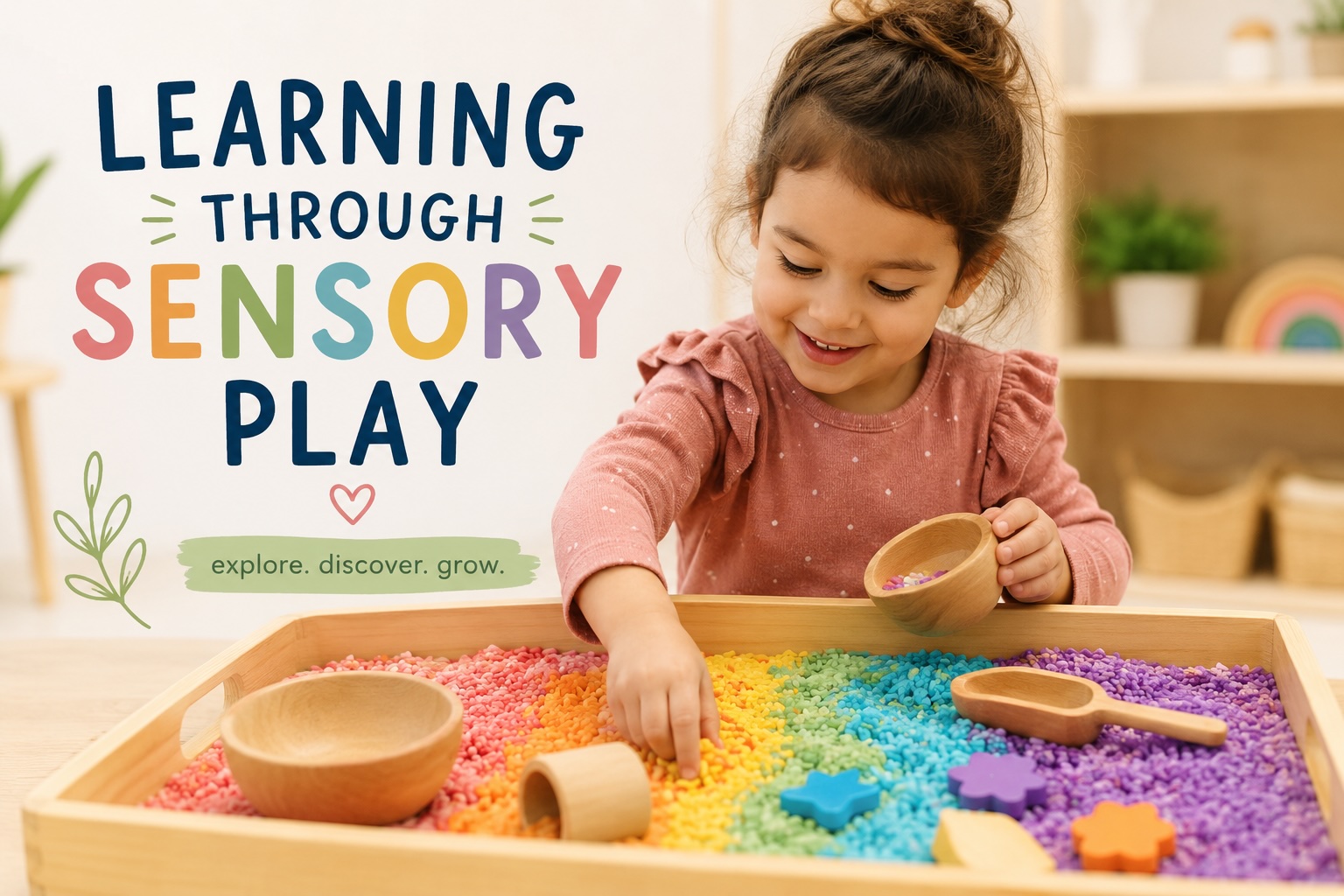
Sensory play can be a helpful tool to support learning. It can provide meaningful opportunities for children to explore, problem solve and be creative through play. Sensory play may include any activity that incorporates touch, sound, sight, smell or taste. Examples may include feeling different textures using slime or shaving foam, incorporating essential oils into waterplay to smell different scents, listening to nature sounds, and more! Sensory play can be a fun way for children to advance skills across multiple developmental domains.
- Language Development
Sensory play can provide the opportunity for children to identify different colours, shapes, and label objects. It can encourage children to expand their vocabulary by describing different textures, sounds, smells and what they see. Additionally, it can support children to follow instructions (e.g., “put in bucket”) and request different actions (e.g., “scoop sand”).
Adults can support language development by narrating key words during play. For example, verbally saying the action and whilst doing it (e.g., say “mix” and mix the material), pointing to different objects, colours and shapes and labelling it, and by describing the material (e.g., “this feels sticky”).
- Cognitive Development and Attentional Skills
Exploration of different objects, textures and ways of playing can promote creativity and problem solving. Children can also begin to learn concepts such as cause and effect by exploring different elements of play. Sensory play can be tailored to each child’s interests and sensory preferences. This may support attentional skills as children may be motivated to engage in the activity for a longer period of time.
- Motor Skills and Play Skills
Sensory play can support the development of fine motor skills. Children may practise actions such as poking or pinching the mixture, and using tools such as tongs or a paint brush during play. It also allows for opportunities for gross motor skill development, such as stomping or jumping on different textures. Exploring different actions may allow children to extend their play skills. Additionally, sensory play may support visual-motor skills by providing opportunities to practise hand-eye coordination.
- Emotional Regulation
Sensory play allows children to explore their own sensory preferences and needs. Understanding the child’s sensory interests can provide useful insight into the sensory tools and strategies they may use to regulate their emotions. Offering different sensory input that the child enjoys may provide a soothing experience that allows the child to regulate their nervous system.
Sensory play can be a fun and engaging way for children to practise skills across a range of developmental areas. This may include language development, cognitive and attentional skills, increasing motor skills and extending play skills. It also allows for children to explore sensory regulation tools which may be used to regulate their emotions when needed
BY: Aaron Verty
Uncategorized
Comments: No Comments
Dolly Day: Kindness Matters More Than Ever

Dolly Day 2026: Kindness Matters More Than Ever
Every child deserves to feel safe, supported, included, and accepted for who they are.
Communities across Australia are coming together to raise awareness about bullying and its devastating impact on children, young people, and families. It is a day that reminds us that kindness, compassion, and connection can genuinely change lives.
At Change for Life, we see firsthand how bullying can affect a child’s confidence, emotional wellbeing, friendships, school participation, and mental health. For many children—particularly those who are neurodivergent, experience anxiety, or find social situations challenging—the effects can be long lasting and deeply distressing.
More Than “Just Kids Being Kids”
Bullying is not a normal part of growing up.
Ongoing bullying can have a significant impact on a child or young person’s emotional and psychological wellbeing and may contribute to:
- Anxiety and depression
- School refusal and disengagement
- Low self-esteem
- Social withdrawal
- Emotional dysregulation
- Difficulties trusting others
- Feelings of isolation and loneliness
Some children openly talk about their experiences, while others may mask their distress. Parents and caregivers may instead notice changes such as:
- Increased irritability or emotional outbursts
- Avoidance of school or social activities
- Changes in sleep or appetite
- Loss of confidence
- Frequent physical complaints such as headaches or stomach aches
- Increased anxiety before school
These signs are important and should never be ignored.
Supporting Children Starts with Listening
One of the most powerful things adults can do is create a safe space where children feel heard, supported, and believed.
Children who experience bullying often benefit from:
- Calm and non-judgemental conversations
- Validation of their feelings and experiences
- Emotional regulation and coping strategies
- Support building social confidence and resilience
- Collaborative support between families, schools, and clinicians
Early support can make a meaningful difference in helping children regain confidence, feel emotionally safe, and reconnect socially.
Building Inclusive Communities
At Change for Life, we believe every child deserves to belong.
Children who communicate, learn, socialise, or regulate emotions differently should be met with understanding and support—not exclusion. Inclusive schools, peer groups, and communities help create safer environments for all young people.
As adults, educators, clinicians, and community members, we all play a role in modelling kindness, empathy, respect, and acceptance.
Wear Blue and Start the Conversation
We encourage families, schools, and workplaces to wear blue, check in with the young people around them, and start meaningful conversations about bullying and mental health.
A simple conversation, a supportive relationship, or a moment of kindness can have a lasting impact.
How Change for Life Can Help
If your child is experiencing bullying, anxiety, emotional distress, school difficulties, or social challenges, our team at Change for Life is here to help.
We offer support for:
- Anxiety and emotional wellbeing
- Social skills and peer relationships
- School-related challenges
- Emotional regulation
- Neurodivergent children and adolescents
- Parent guidance and support
Our psychologists and behavioural clinicians work collaboratively with families to help children feel safe, understood, and supported.
Contact Us
To learn more or book an appointment with our team, please contact Change for Life today.
📞 (03) 8742 4302
📧 info@changeforlife.com.au
Together, we can continue creating communities where every child feels seen, valued, and supported.
BY: Aaron Verty
Uncategorized
Comments: No Comments
Using visual schedules
Using Visual Schedule (at home/during holidays)
When a child is away from kindergarten or school, it may be challenging for them during school holidays without a routine or what they will be doing during the day. Using visual schedules can help with communication and behaviors.
Children may be comfortable with having an individual communicate what they are doing and at what time. Without this some children may find it challenging to be at home during holidays without having a plan of what they are doing. With visual schedules we can give our children a positive environment to; communicate what they want to do (pointing to a visual – books, bubbles), know what they are doing throughout the day, and reduce frustrations in the home.
With the presentation of a visual schedule beginning in the morning, we are communicating with the child what we are doing today. With the first visual (picture) can present “breakfast” (food) displaying to the child that the first activity we are doing today is eating. Following that, below the “breakfast” (food) visual, we can display “inside play”, when doing this activity we may present one activity to begin with (blocks, favourite toy, bubbles). Following this, our third visual (picture) can display “outside play”. This means any play that can be done outside (swing set, running, playing with balls).
All kids have different levels of understanding. It is important to use the visual schedule appropriate to the child. Younger children may use a 2 or 1 activity schedule (breakfast then inside play), doing this will provide the best way that the child understands to make this achievable for them.
Throughout the day we are displaying our visual schedule to the child (in their eye view). “We are doing inside play with blocks for 5 more minutes, then outside play”, we can use language such as this when showing our schedule to the child so they can visually see the schedule and also have verbal communication when we are stopping one activity and moving on with another. Having and communicating a schedule to the child can help with calming their emotions while being at home for the holidays!
Consistency will also help with our visual schedules. Presenting and using visual schedules in daily routines will help children recognise the pattern of daily usage. This will help them feel calmer as they know what to expect during holiday time/time at home.
Overall, presenting a visual schedule in the home helps with communication and expectation in the home. When visually showing and communicating with a child using the schedule, builds further trust and consistency in the home. Understanding schedules and how to show them to children is a great way to have smoother daily living.
BY: Aaron Verty
Uncategorized
Comments: No Comments
Beyond Awareness: Embracing Autism Acceptance and Celebrating Real Wins

Autism Awareness Month is evolving into something more powerful: a push for genuine Autism Acceptance. At Change for Life, we love the conversation that is rising with deepened understanding. While awareness tells us autism exists, acceptance celebrates it as a valid way of being, one that validates and brings forward the distinctive strengths, fresh perspectives, and tangible value to our world when we create spaces for them.
We thought we’d share some light on the magnificence of what it looks like when autism is not only accepted but truly embraced and celebrated.
Take Temple Grandin, for example. Her unique ability to think in vivid pictures and deeply sense the world from an animal’s perspective allowed her to redesign livestock handling systems in a magnificent way. She noticed stressors others missed: sharp shadows, dangling chains, sudden noises. She would then proceed to redesign the systems with curved chutes and calmer environments. Her innovations are now used across much of the industry, improving animal welfare, reducing stress and injury, and enhancing safety for workers. That same detail-oriented, systems-focused approach powers breakthroughs in tech, design, quality control, and beyond.
Chris Packham’s journey is also a beautiful example. The much-loved British naturalist and BBC presenter was diagnosed with autism (then called Asperger’s syndrome) at the age of 44. For decades he had felt different, struggled with social situations, and even loathed parts of himself without knowing why. But once he received his diagnosis, he fully embraced it. The knowledge gave him an incredible sense of autonomy and the language to express himself to others which allowed others to better understand him. That is true power! He now speaks openly about how his autistic mind gives him an extraordinary ability to focus with intense clarity on the natural world, noticing tiny details, patterns, and behaviours in wildlife that others often miss. This unique way of seeing has shaped his entire career, from his passionate documentaries to his role on Springwatch, where his deep connection to nature has inspired millions. He describes autism not as something to hide or fix, but as a different ability that lets him engage with the world in a richer, more vivid way.
Stories like these remind us of the power of embracing autism. When we make space for autistic minds to work in their natural way, with deep focus, pattern recognition, and original thinking, we unlock profound creativity, insight, and solutions that benefit everyone. Autistic individuals often bring a refreshing honesty, precision, and passion that strengthens teams, designs, and communities in quiet but powerful ways.
Here at Change for Life, we celebrate how psychology is stepping up in this shift too. The field is moving away from old deficit-focused models that aimed to “fix” autistic traits. Neurodiversity-affirming psychologists now prioritise collaboration, ongoing learning about autistic experiences, and practical support. This includes validating sensory needs, adapting communication styles, reducing pressure to mask, and working with individuals to build genuine self-understanding and advocacy. The goal is creating safer, more enabling environments whether in therapy, workplaces, or communities, so autistic people can thrive as their powerful, true and authentic selves. Recent consensus from psychologists and autistic adults highlights key principles: authenticity, humility, person-centred flexibility, and true appreciation of autism as a valuable neurotype.
When we move from mere awareness to acceptance, the ripple effects are beautiful and far-reaching. We create spaces where honesty, precision, and original thinking can flourish. Communities become richer with diverse perspectives, and we all gain from the integrity and passion that autistic individuals bring when they feel truly welcomed.
This month, let’s celebrate these real wins: the industry-changing insights, the worlds of wonder brought to life, the precise thinking that strengthens systems, and the integrity that builds trust. Let’s amplify autistic voices, commit to practical changes, and make true acceptance the everyday standard.
A world that fully embraces autism is more wholesome. A world that embraces both awareness and acceptance gains sharper insight, deeper honesty, and more innovative solutions. For us at Change for Life, that’s something worth celebrating every day!
Happy Autism Awareness Month
The Change for Life Team!
BY: Aaron Verty
Uncategorized
Comments: No Comments
Importance of communication in challenging behaviour
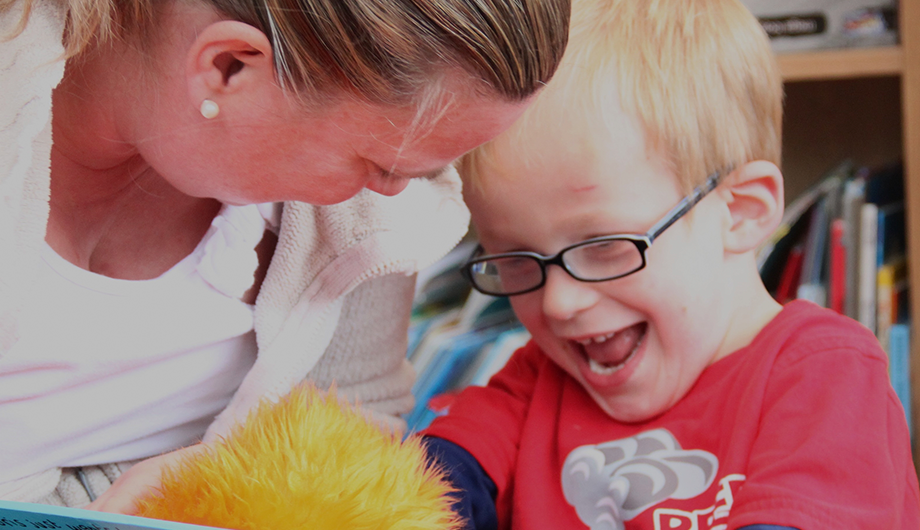
There are moments in parenting where behaviour can feel overwhelming, especially when it seems to come out of nowhere. But often, behaviour isn’t random, it’s a form of communication. For many children, particularly when language is still developing, behaviour becomes the way they express their needs, feelings, or frustrations. When a child doesn’t yet have the tools to say what they need, their actions often speak for them.
Communication and behaviour are closely connected, so when children struggle to express themselves clearly, frustration can build pretty quickly, and that frustration might show up as meltdowns, avoidance, or resistance. Research shows that when communication is difficult, the likelihood of challenging behaviour increases. Understanding this can help shift the focus from “Why is this happening?” to “What might my child be trying to tell me?”
When children start to feel understood, even in small ways, it can make a real difference. Being able to express a need or having someone respond to their attempt at communication can reduce that feeling of being unheard. Over time, this can lessen the need for behaviour to take over as the main way of communicating.
As communication skills begin to grow, children often find more appropriate ways to get their needs met. Instead of relying on behaviour, they might start to ask for help, request a break, or show what they want in clearer ways. These changes don’t happen all at once, but even small shifts can make everyday moments feel a bit easier.
Communication also plays a big role in emotional expression. Children don’t always have the words for big feelings, and without a way to express them, those emotions can come out through behaviour. Supporting communication gives them a starting point to label and share how they feel, even if it’s just in a simple way at first.
You might notice that when communication improves, everyday interactions start to feel smoother. Things like asking for something, sharing a moment, or responding to each other can become less stressful and more positive. It doesn’t mean everything is perfect, but it can take some of the pressure off.
Consistency can really help here too. When the same communication approaches are used across daily routines, children begin to recognise patterns and feel more secure in what to expect. That sense of predictability can help reduce confusion and support calmer responses.
Over time, as children develop stronger ways to express themselves, they often become more independent. Instead of relying on others to figure out what they need, they start to communicate it more clearly on their own. This can reduce frustration for everyone and build their confidence.
At the heart of it all, communication is about connection. When children feel heard and understood, it strengthens trust and the relationship you share. And while progress might feel slow at times, those small moments of understanding really do add up to something meaningful.